Is it time to move beyond car-dependent living?
Publication date: 24.05.2026 23:11:13From habit to a policy shift
It is difficult to imagine modern life without cars. Urban living, commuting, public services, and daily mobility are deeply connected to transport systems. Globally, there are more than 1.4 billion cars, most of which are private passenger vehicles.
Uzbekistan is also experiencing rapid motorization. The number of passenger cars is increasing every year, becoming a core part of the transport system. Almost every household owns a car, and many families own two or even three. This is certainly a sign of prosperity. However, this growth also places significant pressure on urban infrastructure and the environment.
Traffic congestion, air pollution, rising fuel costs, and expensive spare parts are becoming natural consequences of car-dependent living. At the same time, walking — the most natural form of human mobility — is gradually disappearing from everyday life.
“Car-Free Day”: from habit to systemic policy
Around the world, “Car-Free Day” initiatives have been implemented in various forms for many years. Such campaigns have also been held in Uzbekistan, but they were not always treated with sufficient seriousness. In some cases, they were seen as symbolic actions, which limited their environmental and social impact.
For this reason, the approach is now fundamentally changing. With the Presidential Decree of March 14, 2026, “On measures to implement the nationwide Clean Air project aimed at improving atmospheric air quality,” this direction is being elevated to a new, stricter level.
Strengthening measures and state leadership
The key point is that this process is no longer a recommendation, but a system of mandatory implementation.
According to the decree, starting from May 1, 2026, the 10th and 25th of each month will be officially designated as “Car-Free Day” and “Car-Free Week.” On these days, the use of official vehicles by public servants is strictly prohibited.
The essence of this policy is not merely restriction, but a clear societal signal. The public sector must be the first to set an example. Environmental culture, mobility behavior, and public responsibility should begin with state institutions.
It is also important that if these days fall on working days, employees’ salaries will be fully preserved, ensuring a socially balanced reform approach.
Culture of responsibility
“Car-Free Day” is no longer just a campaign. It is gradually becoming a part of civic responsibility and public culture.
Participation is not merely optional — it is a contribution to cleaner air, a better urban environment, and the health of future generations.
Walking or using public transport is viewed as a contribution to a national goal.
The team of “Uzbekcoal” JSC is also actively participating in this initiative. We believe the number of employees choosing to commute on foot will continue to grow.
Nemat Dushayev
Press Secretary of “Uzbekcoal” JSC
Advisor on Information Policy
Latest news
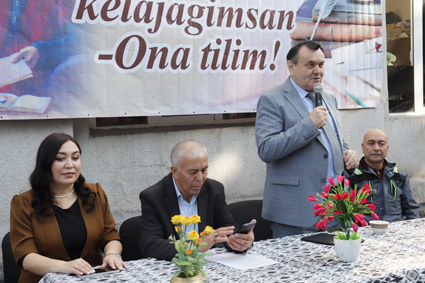
An event dedicated to the native language was held at the Angren coal mine.
Read
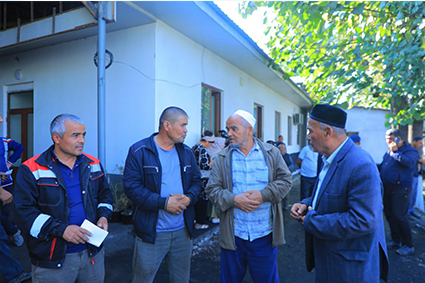
Consumer: “The coal is good quality, the price is reasonable, and home delivery is available”
В преддверии осенне-зимнего сезона обеспечение углём населения территорий, не охваченных природным газоснабжением, остаётся одной из актуальных задач. В Наманганской...
Read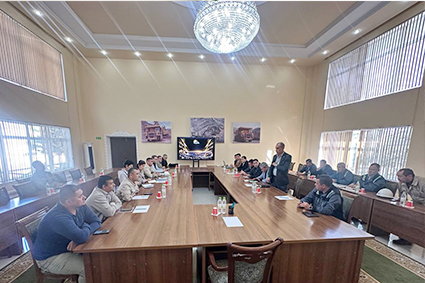
Issues of Improving Operational Efficiency and Labor Productivity Discussed
Read

A representative of Uzbekugol JSC is participating in the international forum “Russian Energy Week 2026”
Read